
— shape the ground. Plan the water flow.
grading & drainage
in southern Ohio
Standing water, recurring washouts, and uneven ground can make your property harder to use. Nathan Excavating helps Southern Ohio property owners with grading, slope correction, drainage improvements, and culvert installation. Tell us what happens after rain and how you want the space to work.
- Locally owned in Waverly, Ohio
- Residential and commercial projects
- Clear estimates and communication
ground work with a purpose
a better shape for your property
From an uneven yard to a building area that needs preparation, the shape of the ground affects how the space works. We consider the surface, surrounding slopes, and water movement together when discussing improvements.

01 / SHAPE THE LAND
Property Grading &
Slope Correction
Reshape uneven areas and adjust ground contours around your intended use. Address high and low spots, changes in elevation, and slopes as part of a plan for the property.

02 / PLAN THE FLOW
Surface Drainage Improvements
Review where runoff travels and where water collects on the property. Discuss changes to the ground and drainage route with nearby buildings, driveways, and a suitable outlet in mind.
03 / CONNECT THE ROUTE
Culvert Installation
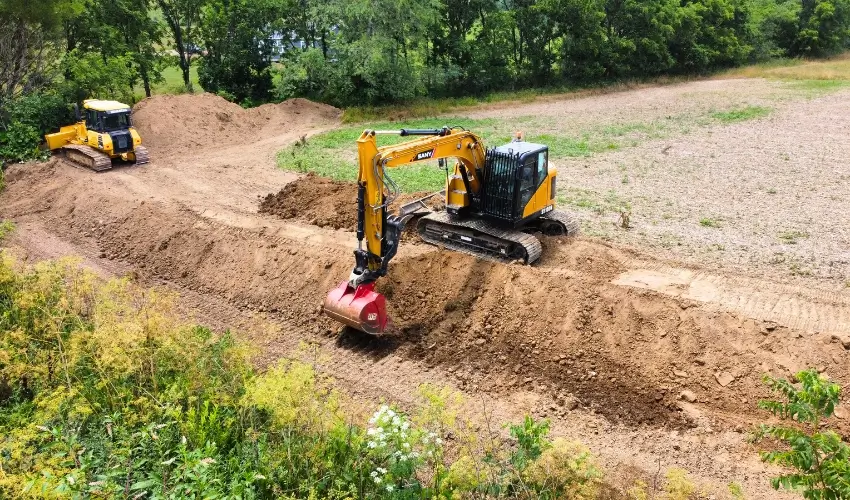
Plan a culvert for a driveway or access crossing where the site calls for one. Its placement needs to fit the surrounding drainage route, the entrance, and how the crossing will be used.
04 / PREPARE THE FINISH
Building Pads &
Finish Grading
Prepare ground levels for the next stage of a project. Share the building plans or intended finish so pad preparation and final surface shaping can be coordinated with the work that follows.
Start with what you see
what happens to your property after it rains?
The pattern often tells us more than a single wet spot. Show us where the problem begins, what gets affected, and what you have already tried. These are four useful starting points.
01
Water That Collects
After Rain
Show us the low areas and how long they stay wet. Mention whether water comes from a roof, driveway, nearby slope, or another part of the property.
03
Uneven Ground That
Limits Use
Tell us which slopes, dips, or rough areas make the space difficult to access or maintain. Explain how you use the area and what you would like to improve.
02
Soil or Stone That
Washes Away
Point out recurring ruts, exposed areas, and places where material collects downhill. Photos of the water’s path help explain why the same section keeps needing attention.
04
A Site That Needs Its
Next Finish
Share what comes after the grading, whether that is construction, a driveway, or landscaping. Available plans and the next contractor’s requirements help define the finish needed.
look at the entire drainage route
follow the water from start to finish
A drainage improvement needs to account for where water comes from, how it crosses the property, and where it can go. Those connections help determine which grading or drainage work makes sense.
01 / THE SOURCE
Where Water Enters the Area
Identify runoff from higher ground, roofs, or hard surfaces. Tell us whether the issue occurs after most rain or only larger storms, and whether recent property changes affected the pattern.
02 / THE ROUTE
How It Moves Across the Ground
Review slopes, low spots, existing ditches, and crossings together. Changes in one area can affect another, so the grading plan needs to consider the surrounding property as well as the trouble spot.
03 / THE OUTLET
Where the Flow Can Go
A suitable outlet is part of the plan. Discuss the receiving area, nearby properties, and any protection needed where water leaves the work area. Soil loss may call for additional erosion-control work.
from the first photos to the agreed scope of work
Let’s plan your grading & drainage project
Step one
Show us the problem
Start with the property location, what you are seeing, and your goal for the space. Photos from after rain and a description of previous repairs can help explain the situation.
Step two
Review the site conditions
We’ll discuss slopes, drainage routes, access, existing features, and the work involved. A site assessment may be needed before pricing or recommending changes to the ground.
Step three
Define the work & finish
Agree on the grading, drainage work, material handling, and condition the area will be left in. Discuss timing, any plans needed, and the finishing or restoration that follows.
Ready to start your grading and drainage project?
Fill out our contact form with your project information and our expert team will reach back out as soon as possible!
a southern ohio company
grading & Drainage services Across southern ohio
Nathan Excavating is owned by Todd and Jake Nathan. We help homeowners, landowners, businesses, and builders with grading, drainage, and related property improvements throughout Southern Ohio. Tell us where the property is and what needs to work better.
Nearby community? Share your address so we can discuss the project and availability.

Todd & Jake Nathan · Co-founders
before the ground work starts
grading & drainage questions
You can contact us before you know which service the property needs. Explain the problem, the location, and what you would like to accomplish.
Does grading mean making the whole property flat?
No. Grading shapes the ground for its intended use and drainage. Some areas may need a level surface, while others need a slope that directs water along a planned route. The appropriate elevations depend on the site and the project.
Can grading fix standing water in my yard?
Grading may help when the shape of the ground traps or directs surface water. The cause, soil conditions, incoming runoff, and available outlet all need consideration. Some properties need additional drainage work, so the approach should follow a site assessment.
Do you install culverts for driveways and access routes?
Yes, culvert installation is one of our services. Tell us where the crossing is, how it is used, and what happens during rain. The site conditions and drainage route help determine the installation requirements.
What is the difference between rough and finish grading?
Rough grading establishes the main shape and elevations. Finish grading refines the surface for the agreed next step. Confirm whether topsoil, seeding, stone, or other restoration is part of the quote or will be handled separately.
What affects the cost of grading and drainage work?
The size of the work area, elevation changes, ground conditions, equipment access, material quantities, hauling, and any culvert work affect the scope. The required finish and complexity of the drainage route also matter. A site assessment may be needed before an estimate.
What information helps when requesting a quote?
Send the property location, a description of the problem, and photos if available. Include where water collects or runs, how long the issue has occurred, and any repairs already attempted. For new construction, share available plans and the next contractor’s requirements.
Let’s Make Your Property Work Better
Tell us about the standing water, washouts, uneven ground, or project you are planning. We’ll discuss the grading and drainage work your property may need.