— driveways · Property planning advice
why does my gravel driveway
keep washing out?
Gravel driveway washing out after rain? Learn the common causes, what to look for, and when to plan driveway and drainage repairs in Southern Ohio.
By The Nathan Excavating Team
the short answer
A gravel driveway can keep washing out when runoff follows the driving surface and carries material away. Ruts, drainage problems, unsuitable surface gravel, or a weak base can contribute. A useful repair starts by identifying where the water comes from, where it travels, and where it can safely leave.
Drainage guidance: Penn State’s surface drainage practices.

A gravel driveway on a sloped residential property. Include the surrounding ground when looking at a recurring drainage problem.
You spread another load of stone. The driveway looks better. Then a heavy rain leaves channels in the surface and gravel where it does not belong.
Before you repeat the same repair, take a closer look at the pattern. Is the damage down the middle, along one edge, or near the road? Does it happen after every rain or only a major storm? Those details help make the next conversation with a contractor more useful.
on this page
understand the problem
Common Causes
More than one issue may be involved. The goal is to understand the whole driveway, including the ground above it and the outlet below it.
01 Water is running along the driveway
Runoff needs a route off the driving surface. When it collects and travels down the driveway instead, it can cut channels and move gravel. A long downhill stretch deserves particular attention: look at where water first enters and whether it has opportunities to leave before reaching the bottom.
Reference: Penn State — Surface Drainage Practices.
02 Ruts or the surface shape are holding water
Wheel ruts can become small drainage channels. Low spots can hold water, while a raised edge may prevent it from leaving. A crown—a center that is higher than the edges—is one way to shed runoff. Other sites call for a different cross-slope. The shape needs to suit the terrain and the intended outlet.
Reference: Penn State — Crown and Cross-Slope.
03 A ditch or culvert is not carrying water away
A ditch filled with sediment or a culvert blocked by debris can interrupt drainage. The location and elevation of the culvert matter, too. Water backing up near an entrance is a reason to inspect the drainage route, including the discharge end, before assuming another layer of gravel will solve it.
Reference: Gravel Roads manual — Drainage.
04 The surface material or compaction needs attention
Gravel products serve different purposes. A wearing surface needs a suitable mix of particle sizes; rounded decorative stone and material intended for a base do not necessarily perform the same way. The choice should account for the existing driveway and its use. The Gravel Roads manual explains these aggregate differences.
Placement matters alongside material selection. Proper compaction helps stabilize a reshaped surface; leaving freshly spread material loose can reduce its durability. Penn State’s maintenance guidance covers shaping and compaction.
05 Water is weakening the ground underneath
Reference: Penn State — Underdrains.
read the signs
What to Look For
When conditions are safe, photograph the driveway from the top, bottom, and problem area. Include the surrounding ground so the contractor can see more than a close-up of displaced stone.
| What you notice | What it may suggest |
| Channels following tire tracks | Ruts are concentrating runoff along the driving surface. |
| Puddles or water trapped at an edge | A low spot or raised shoulder may be interfering with surface drainage. |
| Water backed up near a culvert | The inlet, pipe, outlet, and drainage route need a closer look. |
| A spot that stays soft between storms | Persistent moisture below the surface may be part of the problem. |
These are clues, not a diagnosis. See the guidance on surface shape, culvert drainage, and subsurface water.
Record when the damage appeared and what work has already been tried. If a section is deeply washed out or an edge has been undermined, keep vehicles off that area until it can be assessed.
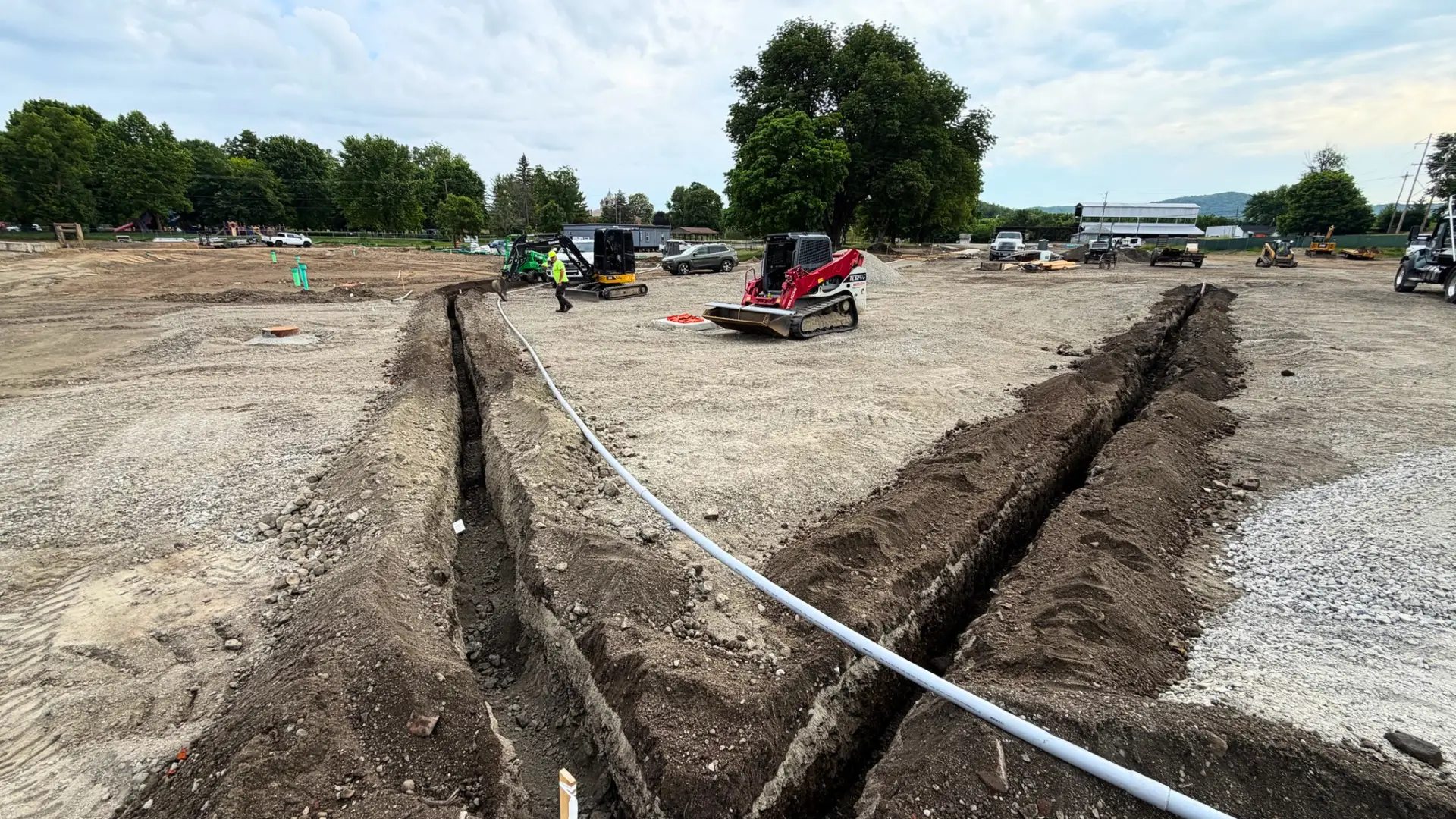
A culvert opening with surrounding stone and timber formwork. The inlet and outlet are both part of the drainage picture.
read the signs
Planning the Repair
A useful repair proposal should explain why material is being lost and how the proposed work addresses it. Ask your contractor to walk through these four parts:
The water route:Where does runoff enter, and where will it go after the work? The outlet needs attention as well as the driveway itself.
The surface shape:Which ruts, low areas, or edges need reshaping so water can leave the driving surface?
The drainage structures: Do existing ditches or culverts need clearing, repair, or a different approach? Roadside changes should be coordinated with the authority responsible for the road.
The finished surface: What gravel is appropriate, how will it be placed and compacted, and what ongoing maintenance will it need?
Will adding more gravel help?
Gravel driveways also need maintenance over time. Traffic and weather can change the surface, so ask what to watch for after the repair and when reshaping or additional material may be appropriate. Penn State’s surface maintenance guidance explains why this is ongoing work.
your next step
Getting a Local Quote
If washouts keep returning, or access to your property is becoming difficult, it is worth discussing the whole site before arranging more material.
Based in Waverly, Nathan Excavating provides gravel driveway repair and grading and drainage services across Southern Ohio. You can check our service areas and tell us where your property is located.
When you contact us, these details are a useful starting point:
- Your property location and the part of the driveway that is affected.
- Photos showing the damaged area and the approach from both directions.
- Whether the issue follows every rain or only larger storms.
- Any known ditches, culverts, persistent wet spots, or previous repairs.
- Approximate driveway length and width, plus access concerns for equipment.
Photos help start the conversation. The recommended work and quote depend on the site conditions and the scope of the repair.
before you book
Common Questions
Will larger stone stop my driveway from washing out?
Larger stone alone is not a complete answer. The right material depends on whether it is forming the base or the driving surface, and the surface needs an appropriate mix of sizes. Ask which product suits the repair and why. See the surface aggregate guidance.
Can grading fix a washed-out gravel driveway?
Grading can restore the surface shape and remove ruts that hold or channel water. It may be one part of the work; a drainage obstruction or persistent moisture underneath still needs its own assessment. See the guidance on crown and cross-slope.
Do I need a French drain?
Possibly, if subsurface water is the problem. An underdrain is not an automatic solution for runoff flowing over a driveway. Sediment carried by surface water can clog it, so the source of the water matters. See Penn State’s underdrain guidance.
What affects the cost of repairing a driveway washout?
The affected area, existing condition, access, material needs, and any grading or drainage work all shape the scope. Share photos and your property location when requesting a quote. An inspection may be needed before the work and price can be confirmed.

Nathan Excavating
Based in Waverly, Ohio, our expert is dedicated to helping property owners plan excavation, driveway, grading, and drainage work across Southern Ohio, including Pike, Scioto, Jackson, and Ross counties.
What can we help you with?
looking for help with your property?
Nathan Excavating is based in Waverly and serves homeowners, businesses, contractors, and landowners across Southern Ohio. Explore the services that fit your project, or check the communities we serve.
- Driveway Repair
- Grading & Drainage
- Land & Brush Clearing
- Site Preparation
- View All Services
- Explore Our Service Area
Let’s Talk About Your Project
Share the property location, what needs to change, and any photos that help explain it. We’ll discuss the work and the next steps toward a quote.